


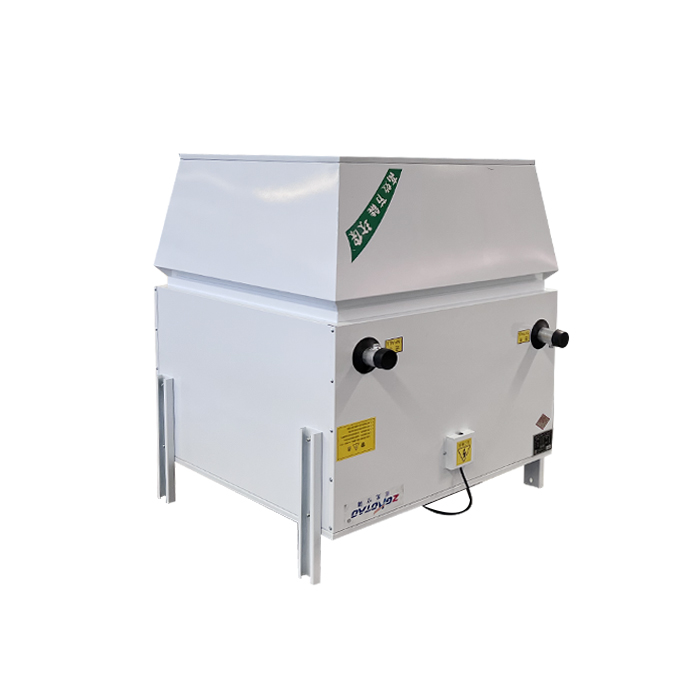
Heating Units for Large Spaces

Heating units for large spaces are suspended from the roof of high-ceiling industrial buildings. They heat the air through a high-efficiency heat exchanger inside the unit and then use an advanced air distribution device to deliver the warm air uniformly from the top down to all areas of the space, eliminating undesirable temperature layers. A suction-type axial fan recovers heat from the roof, minimizing heat loss through the ceiling. Thanks to the high efficiency of the air distribution device, the required hot water inlet temperature is low, achieving true energy savings and consumption reduction. The airflow velocity and angle of the air distribution device are both adjustable, ensuring the desired temperature while creating a draft-free working environment, making personnel in the space feel warm and comfortable.
Large-space buildings often have significant depth, typically ranging from 50 to 100 meters or even more. Traditional methods install radiators on the lower parts of sidewalls. Radiators dissipate heat through natural convection, causing warm air to rise naturally, which only reaches a very limited area. They occupy considerable floor space and can only provide localized heating. The temperature near the ceiling is higher than at floor level, creating a large温差, which results in substantial heat loss at the top of the building. This creates temperature variations throughout the space, failing to meet comfortable heating requirements.
Improved versions of traditional unit heaters are mounted on sidewalls, blowing warm air towards the center. However, areas close to the heater experience high temperatures and high airflow speeds. At greater distances, the natural tendency of warm air to rise prevents it from reaching those areas, leading to extremely uneven temperature and airflow distribution within the space.
The heating units for large spaces utilize a wireless variable frequency control system, making installation simple. The unit is suspended from the factory roof using specialized hanging rods. After connecting the inlet and outlet water pipes and supplying three-phase power cables to the unit, its operating status can be controlled via a wireless control terminal on the ground. These units feature a large individual coverage area, low installation cost, and user-friendly control.